How PU Foam Sealant Supports Home Renovation Projects
Home renovation projects often involve updating structures, improving energy efficiency, and enhancing overall comfort. One material that has become essential for these tasks is PU foam sealant. Its versatility, durability, and ease of application make it a go-to solution for sealing gaps, insulating spaces, and reinforcing structural elements. Understanding how PU foam sealant can support various renovation tasks ensures better results and long-lasting improvements.
The Role of PU Foam Sealant in Renovations
PU foam sealant is a polyurethane-based expanding foam designed to fill cavities, cracks, and gaps in walls, floors, ceilings, and around fixtures. It provides both insulation and structural support, making it ideal for a wide range of renovation applications. For homeowners seeking reliable products, PU foam sealant offers consistent performance in both indoor and outdoor projects, ensuring that energy efficiency, moisture protection, and durability are maintained throughout the home.
Key Benefits in Home Renovation
1. Energy Efficiency Improvement
During renovations, sealing gaps around windows, doors, and walls with PU foam prevents air leaks that contribute to heat loss or gain. This insulation reduces energy consumption, lowers utility bills, and maintains consistent indoor temperatures, enhancing the comfort of renovated spaces.
2. Moisture and Mold Prevention
Renovation often involves exposing hidden gaps or damaged areas. PU foam sealant provides a moisture-resistant barrier that prevents water infiltration, which can lead to mold growth and structural damage. Sealing these areas during renovation safeguards both new and existing structures.
3. Noise Reduction
Renovations may focus on improving comfort, and noise control is an important aspect. The dense, expanding properties of PU foam sealant help reduce sound transmission through walls, ceilings, and gaps, creating a quieter and more enjoyable indoor environment.
Practical Applications in Renovation Projects
1. Window and Door Installations
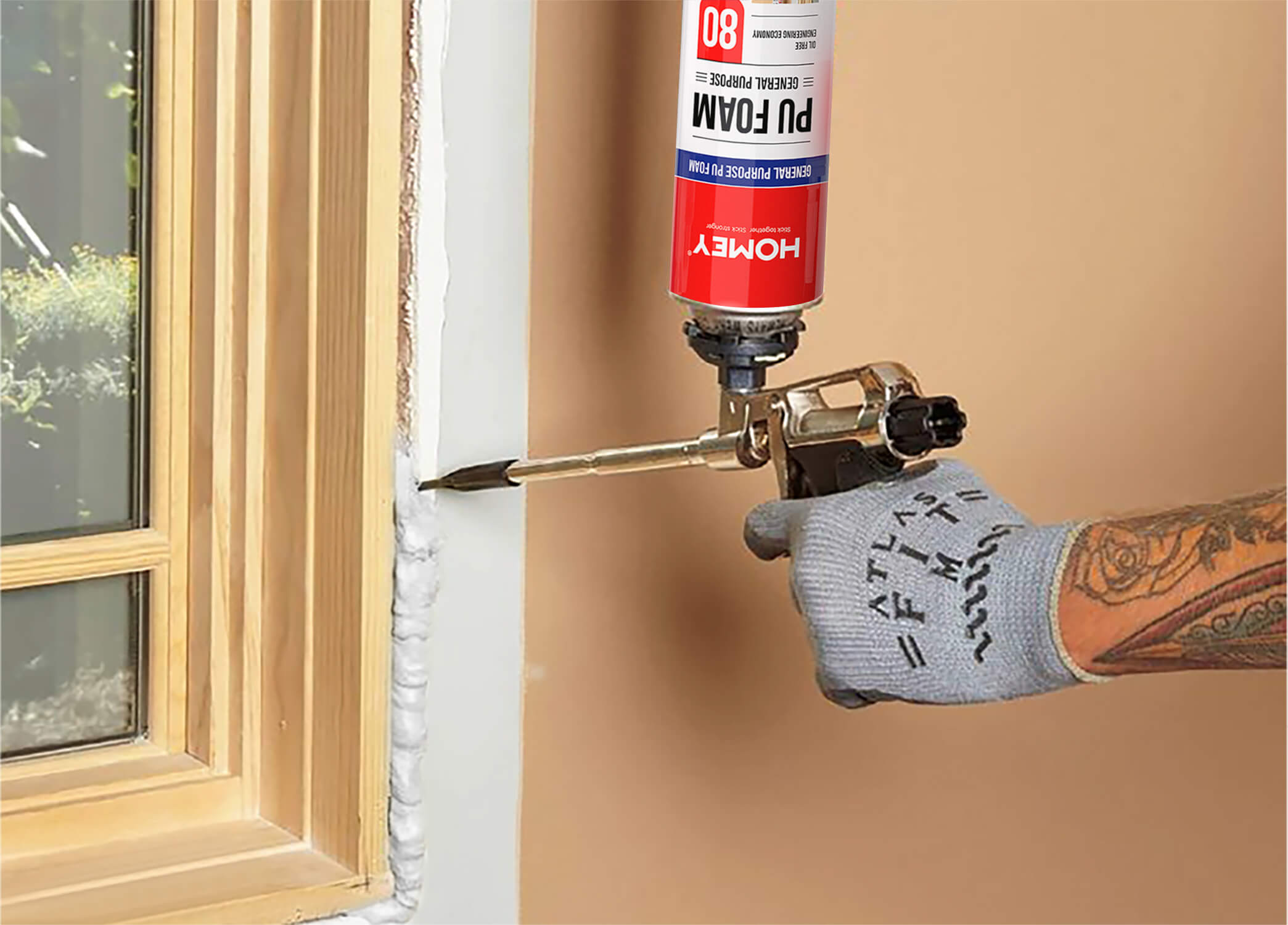
Replacing or upgrading windows and doors is a common renovation task. PU foam sealant ensures a tight seal between frames and walls, enhancing thermal insulation, reducing drafts, and supporting the structural integrity of the installation.
2. Wall and Ceiling Cavities
Renovating walls or ceilings often reveals empty cavities or gaps that need filling. PU foam provides structural support, prevents movement, and enhances the overall stability of these areas. Its ability to bond with multiple surfaces, including wood, metal, and concrete, makes it versatile for different renovation materials.
3. Plumbing and HVAC Penetrations
Renovations frequently involve adjustments to plumbing, electrical, or HVAC systems. PU foam sealant effectively seals gaps around pipes, vents, and conduits, preventing air and water leaks while maintaining the energy efficiency and integrity of renovated areas.
4. Outdoor Renovation Projects
PU foam sealant is also suitable for exterior renovation, such as sealing gaps around facades, roof edges, and outdoor fixtures. Its weather-resistant properties protect the home from water, wind, and temperature fluctuations, extending the lifespan of exterior renovations.
Tips for Using PU Foam Sealant Effectively
- Prepare Surfaces Properly: Ensure surfaces are clean, dry, and free of debris to improve adhesion.
- Apply in Controlled Layers: For deep gaps, apply foam in layers to manage expansion and avoid overfilling.
- Use Protective Gear: Gloves and goggles protect against skin and eye contact with uncured foam.
- Trim Excess Foam After Curing: Once the foam has hardened, trim any protruding material to achieve a neat finish.
- Check for Compatibility: Ensure the foam type is appropriate for indoor, outdoor, or mixed renovation applications.
Long-Term Advantages
Using PU foam sealant in renovation projects provides long-term benefits:
- Maintains energy efficiency and reduces heating or cooling costs.
- Protects structural elements from moisture, pests, and environmental damage.
- Enhances comfort by minimizing drafts and noise.
- Supports walls, frames, and fixtures to prevent shifting or damage over time.
Conclusion
PU foam sealant is a powerful tool in home renovation, offering insulation, moisture protection, structural support, and noise reduction. Its versatility allows it to be used in various applications, from window and door installations to wall cavities and plumbing penetrations. By applying PU foam sealant correctly and following recommended safety and application practices, homeowners and contractors can achieve more efficient, durable, and comfortable living spaces. Incorporating this material into renovation projects ensures that improvements are long-lasting and provide measurable benefits in energy efficiency, structural integrity, and overall home comfort.