The Evolution of Men’s Athletic Footwear
Men’s athletic footwear has always reflected the way sport itself evolves. What started as basic protection for the feet has gradually transformed into specialised equipment designed around movement, surfaces, and performance demands. Today, sports shoes are not just about playing the game. They represent progress in technology, materials, and how athletes interact with their sport, whether that sport is running, training, or cricket.
From early running trainers inspired by engineering precision to modern cricket shoes built for stability and grip, men’s sport shoes tell a story of adaptation. Every update responds to how athletes move, train, and compete in real conditions.
From Utility to Performance-Driven Design
In the early days of organised sport, footwear was largely about utility. Shoes were sturdy, often leather-based, and focused on durability rather than comfort or responsiveness. As sports became faster and more physically demanding, this approach no longer worked.
Athletes needed footwear that could absorb impact, support directional changes, and remain comfortable over long hours. This shift marked the beginning of performance-driven design, where cushioning systems, structured midsoles, and breathable uppers became essential rather than optional.
Cricket Footwear Finds Its Own Language
While running shoes evolved around forward motion and rhythm, cricket shoes had a very different challenge to solve. Cricket demands sudden acceleration, lateral movement, and long hours spent standing, sprinting, and stabilising on unpredictable surfaces.
Early cricket shoes for men borrowed heavily from general athletic footwear. Over time, they developed their own design logic focused on grip, balance, and durability.
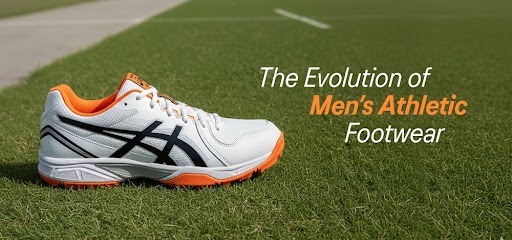
The ASICS GEL-100 NOT OUT reflects this evolution at the entry level. Designed as an all-round turf cricket shoe for beginner athletes, it focuses on reliability rather than complexity. The emphasis here is on providing a stable base, dependable traction, and comfort that allows new players to focus on learning the game instead of fighting their footwear.
It’s a reminder that evolution isn’t always about adding more technology. Sometimes, it’s about refining the basics so athletes can build confidence and consistency.
Stability Becomes a Priority
As cricket grew faster and more competitive, footwear had to adapt. Players began demanding better lateral support, improved grip patterns, and shoes that could handle aggressive movements without sacrificing comfort.
The ASICS GEL-GULLY™ 7 represents this next stage. Its reconstructed midfoot design introduces a more supportive internal panel, helping players feel locked in during side-to-side movements. This is especially important for bowlers and fielders who rely on quick direction changes.
The improved vamp design in the toe area improves flexibility and comfort, while the wide gauge, four-stud outsole configuration delivers grip where it matters most. From a design perspective, this cricket shoe reflects how cricket footwear became increasingly specialised, responding directly to the demands of competitive play rather than general athletic use.
Materials That Changed the Game
One of the most significant shifts in men’s sports shoes has been the transition from heavy, absorbent materials to lightweight synthetics and engineered meshes. Early leather shoes offered durability but struggled with moisture and weight.
Modern materials solved these problems while unlocking new design possibilities. Mesh uppers improved breathability. Synthetic overlays allowed for targeted reinforcement without bulk. Cushioning systems became lighter and more responsive.
Across running and cricket footwear, these material advances allowed designers to think beyond protection and focus on performance longevity, ensuring athletes could train and compete longer without discomfort.
The Role of Technology and Athlete Feedback
Technology has played a defining role in shaping modern athletic shoes. Motion analysis, foot scanning, and biomechanical research now inform everything from midsole geometry to outsole traction patterns.
But just as important has been athlete feedback. Shoes evolve not only through data, but through real-world use. Runners, cricketers, and trainers continuously influence updates by pushing footwear to its limits in training and competition.
This feedback loop has led to the development of some of the best cricket shoes for men and why shoes like the ASICS GT-2160™, GEL-100 NOT OUT, and GEL-GULLY™ 7 feel purpose-built. Each reflects lessons learned from how athletes actually move, not how designers assume they move.
Performance Meets Identity
Today, men’s athletic footwear sits at the intersection of performance and identity. Shoes are chosen not just for how they function, but for what they represent. A technical runner signals precision and discipline. A cricket shoe reflects commitment to the sport and respect for its demands.
Design language plays a major role here. Sculpted midsoles, visible cushioning, and structured uppers communicate intent. They tell a story of preparation, movement, and progression.
Looking Ahead
The evolution of men’s sports shoes is far from complete. As sports continue to evolve, so will the shoes that support them. Sustainability, smarter materials, and even more personalised fit systems are shaping the future.
What remains constant is the purpose. Athletic footwear will always exist to support movement, reduce strain, and help athletes perform with confidence.
From the engineered precision of the GT-2160™, to the accessible reliability of the GEL-100 NOT OUT, to the stability-focused design of the GEL-GULLY™ 7, each ASICS shoe represents a different chapter in this ongoing story.
And together, they show how far men’s athletic footwear has come, from simple utility to finely tuned performance tools built for the modern athlete.